THREE YEARS OF KHALIL HALILU AT NASENI: THE PROMISE OF TRANSFORMATION AND THE BURDEN OF PROOF

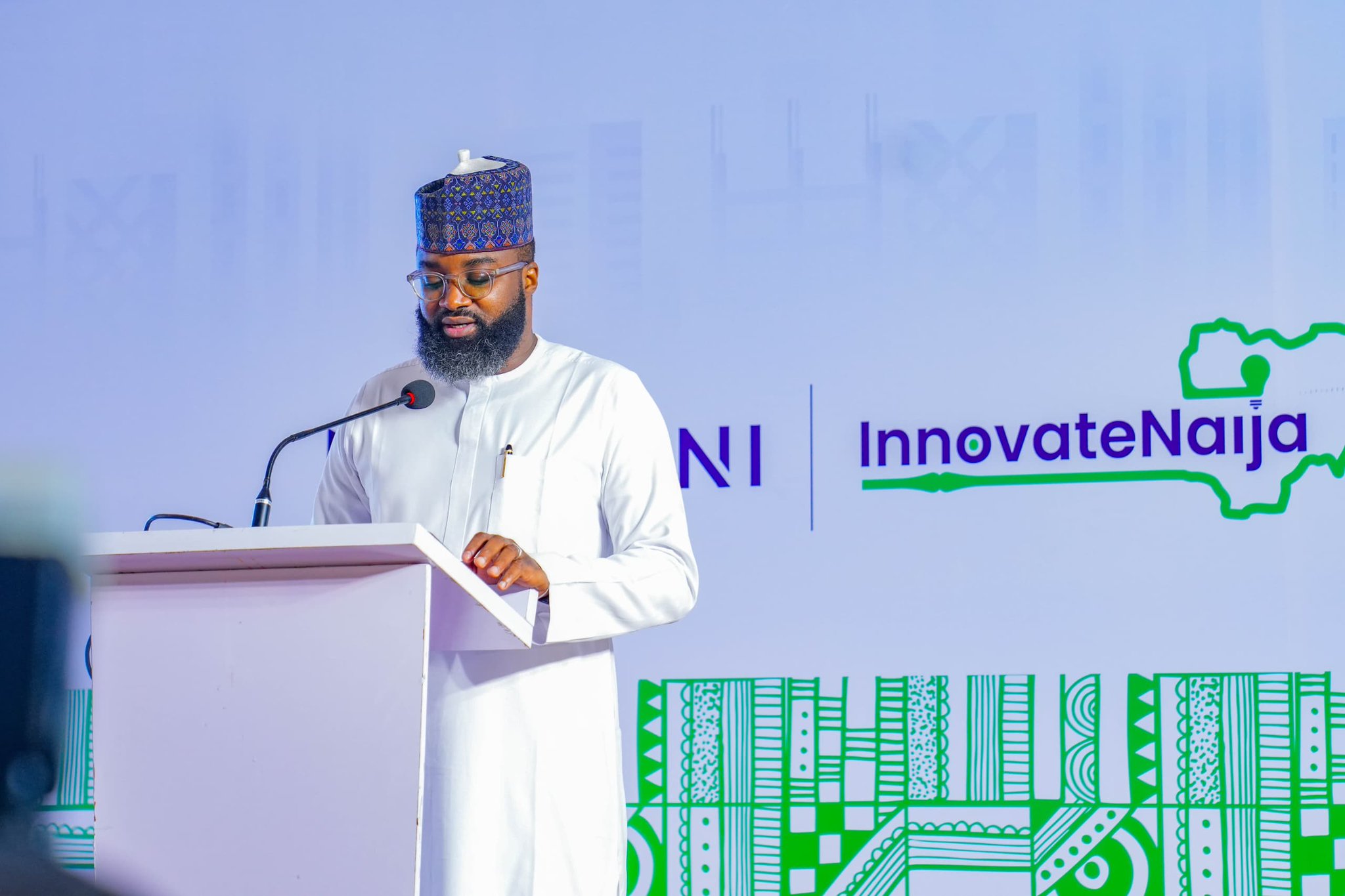
Nigeria does not need another institution that excels at announcing innovation; it needs one that turns innovation into factories, jobs, industrial capacity and prosperity. As NASENI celebrates three years under Khalil Suleiman Halilu, The Press Nigeria examines the questions that must define the agency’s record
There is a difference between a country that announces innovation and a country that industrialises through innovation. One produces presentations, launches, prototypes and promises. The other produces machines, creates businesses, employs skilled workers, replaces imports and builds the technological capacity to compete with the world.
That difference is where the National Agency for Science and Engineering Infrastructure (NASENI) must be judged.
Three years into the leadership of its Executive Vice Chairman and Chief Executive Officer, Khalil Suleiman Halilu, the agency is presenting its tenure as a period of institutional reform, technology commercialisation and a renewed connection between Nigerian research and the marketplace.
The narrative is ambitious. It speaks of turning local ideas into products, transforming products into commercial opportunities and building industries from Nigerian ingenuity.
These are precisely the objectives a technology-driven economy needs.
But at a time when Nigerians are struggling with the high cost of living, businesses are battling production expenses, manufacturers are contending with infrastructure constraints and the country continues to pursue industrial self-reliance, ambition alone is not enough.
**The question is no longer simply what NASENI says it is building. The question is what Nigeria can demonstrably show for the resources, authority and opportunities entrusted to the agency.**
That is the accountability test. And it deserves an answer that goes beyond celebratory statements.
Nigeria has never suffered from a shortage of development plans. Governments have launched industrial policies, research programmes, technology initiatives and economic blueprints for decades. The more persistent problem has been converting those plans into productive assets that survive beyond the announcement ceremony.
NASENI occupies a particularly important position in this equation. Its mandate is connected to the science, engineering and technological infrastructure required to strengthen domestic manufacturing and reduce dependence on imported technologies.
The agency should be a bridge between the laboratory and the factory, between the inventor and the entrepreneur, and between public research funding and commercially viable Nigerian products.
Under Halilu, NASENI has emphasised institutional restructuring, technology development, research commercialisation and partnerships with private-sector players. The central issue is whether these interventions are producing a measurable change in Nigeria’s industrial landscape.
How many new manufacturing operations have become fully functional? How many locally developed technologies have achieved sustained commercial production? How many Nigerian businesses have adopted NASENI-supported innovations? How many jobs have been created and retained?
These are not hostile questions. They are the minimum questions any serious public institution should expect when it presents three years of leadership as a period of transformation.
An agency can improve its internal systems and still struggle to deliver industrial results. It can develop promising technology without establishing a viable route to mass production. It can sign partnerships without securing the investment needed to make them operational.
The distinction matters because the ultimate purpose of technology development is not to demonstrate what is possible. It is to make useful technology available, affordable and economically sustainable.
## FORTY PRODUCTS, ONE FUNDAMENTAL QUESTION: WHAT HAPPENED AFTER THE LAUNCH?
NASENI has promoted a portfolio of locally developed products covering areas such as renewable energy, electric mobility, agriculture, healthcare, information technology and household equipment.
The diversity of this portfolio suggests that the agency recognises the breadth of Nigeria’s technological needs. It also creates an obligation to account for what has happened to these products after their development and presentation to the public.
A prototype is evidence that a technical concept can work under certain conditions. A market-ready product suggests that it is prepared for commercial introduction. Mass production requires something more demanding: reliable manufacturing facilities, quality control, affordable inputs, distribution networks, customer support and sufficient demand to sustain operations.
These are different stages of development. They must not be confused.
For every product NASENI has declared ready for the market, Nigerians deserve to know whether it is available for purchase, where it is manufactured, how many units have been sold, what revenue it has generated and whether the production process relies substantially on locally sourced components.
If a locally developed laptop, battery, electric vehicle or agricultural machine is commercially successful, its performance should be measurable. If it remains at the prototype or pilot stage, that should be disclosed honestly.
**A product unveiling is an event. A successful product is an economic outcome. A sustainable manufacturing industry is a national achievement.**
NASENI should publish a clear commercialisation register showing the status of its major products, the companies responsible for production, the scale of manufacturing, sales performance and the extent of local content.
Such disclosure would enable Nigerians to distinguish genuine industrial progress from technical accomplishments that have yet to achieve commercial viability.
Nigeria’s industrial challenge is not merely a shortage of ideas. It is the difficulty of building an ecosystem in which ideas can become competitive products.
Manufacturers need dependable electricity, accessible financing, technical expertise, machinery, raw materials, efficient logistics and a market capable of sustaining production. Technology agencies must therefore do more than develop inventions. They must help establish the conditions under which those inventions can be manufactured and maintained at scale.
NASENI’s initiatives in engineering, renewable energy, electric mobility and other technology-intensive sectors should be examined against that standard.
Which facilities have moved from construction or installation into regular commercial operations? What is their installed production capacity, and what proportion of that capacity is being utilised? How much has been invested, and what measurable output has followed?
Where partnerships have been announced, what obligations have the participating organisations fulfilled? Which projects have attracted private capital, and which remain dependent on further public funding?
Where facilities are behind schedule, what caused the delay? What corrective measures have been taken? What are the revised delivery dates?
These questions become especially important when public money is committed to projects whose promised benefits include job creation, local manufacturing and import substitution.
A factory that operates consistently can create an economic chain involving suppliers, engineers, technicians, transport operators, distributors and retailers. A facility that remains underutilised cannot deliver the same benefits merely because its establishment was announced.
The objective should be to measure operating capacity, productive output and economic contribution—not simply the number of projects listed in a presentation.
## PUBLIC MONEY MUST PRODUCE PUBLIC VALUE
The credibility of any public institution depends partly on its willingness to demonstrate what it has achieved with the resources available to it.
NASENI should therefore be prepared to account for the relationship between its expenditure and its results.
How much was allocated to each major programme? How much was actually released and spent? What milestones were achieved with the money? Were projects completed within their approved budgets and timelines? What independent verification exists for the results being reported?
These questions should not be interpreted as an accusation of financial misconduct. They are the foundation of responsible public administration.
A project can be legitimate and well-intentioned while still suffering from poor planning, delays, weak demand or inadequate implementation. Transparent reporting helps identify such problems early enough for corrective action.
For the Halilu administration, a detailed three-year financial and performance report would provide a stronger basis for public confidence than broad claims of institutional transformation.
It should identify completed projects separately from ongoing projects, disclose material delays, explain variations in cost and scope, and show the operational outcomes associated with major expenditure.
The Nigerian public should not have to rely exclusively on an agency’s own promotional language to understand how effectively it has performed its mandate.
Public accountability requires information that can be examined, compared and independently tested.
NASENI has also highlighted support for researchers and programmes intended to move innovations closer to commercial use.
This is an important area of intervention. Nigerian universities, research institutions and independent innovators contain technical knowledge that could help solve problems in agriculture, energy, transport, healthcare and manufacturing.
Yet the distance between a promising research project and a successful business can be considerable.
An inventor may develop a workable technology but lack the funding required for certification, industrial tooling, product testing, intellectual property protection or commercial production. Another may produce a useful prototype without access to customers or distribution.
If NASENI is to establish a genuinely connected innovation system, it must demonstrate how it addresses these obstacles.
The agency should disclose the outcomes of the research projects it supports, including technologies completed, patents secured where applicable, licensing agreements, private-sector investments attracted, products commercialised and revenue generated.
It should also explain how it tracks projects after grants have been awarded and what happens when milestones are missed.
Research funding should not be assessed solely by the number of beneficiaries or the value of grants distributed. Its long-term value lies in the knowledge created, the problems solved and the productive capacity that emerges.
**The true return on research investment is not the cheque presented to a researcher; it is the useful technology, viable enterprise or measurable public benefit that follows.**
Technology development is frequently presented as a route to employment. In principle, the connection is sound: successful manufacturing can create direct jobs and stimulate demand for supporting services.
But the existence of a technology programme does not automatically establish that jobs have been created.
NASENI should clarify how many people have gained employment through its completed projects, distinguishing permanent jobs from temporary construction work, training placements, internships and short-term engagements.
It should also show the skills developed, the number of trainees who secured employment and the extent to which women, young people and small businesses have benefited from its programmes.
For projects involving private-sector partners, employment figures should be attributable to identifiable operations rather than projected opportunities that may never materialise.
This information would help Nigerians determine whether the agency’s activities are expanding economic participation or simply generating activity within the administrative and project-development process.
In a country where many young people are seeking meaningful employment, credible job data is not a public-relations accessory. It is an essential measure of performance.
One of the strongest arguments for developing Nigerian technology is the opportunity to reduce dependence on imported equipment and manufactured products.
But import substitution is not achieved simply because a product has been designed or assembled locally.
The economic case becomes stronger when a Nigerian-made alternative meets required quality standards, is competitively priced, remains available to buyers and reduces the need for imported finished goods or components.
NASENI should identify the products through which its interventions have delivered such results and provide credible data on local content, domestic sales and import displacement.
Where foreign components remain necessary, the agency should explain what proportion of the production chain has been localised and what practical steps are being taken to deepen domestic manufacturing.
This would provide a clearer picture of whether the agency is building lasting technological independence or primarily facilitating the local assembly of products that remain heavily dependent on external supply chains.
Nigeria does not need technological isolation. It needs the capacity to participate more productively in global technology markets, manufacture more at home and retain a greater share of the value generated by its economy.
That is the standard against which NASENI’s contribution should be measured.
The strongest way for NASENI to establish the record of the Halilu era is to publish a transparent, independently verifiable scorecard covering the period from September 2023 to September 2026.
The report should answer five central questions:
**First, what was promised?** The agency should identify the principal projects, targets, budgets and timelines announced at the beginning of the period.
**Second, what was delivered?** Completed projects should be distinguished from ongoing work, pilot schemes, prototypes and initiatives that have not commenced.
**Third, what does the evidence show?** Production figures, product sales, operational capacity, jobs created, private investment and other measurable outcomes should be provided wherever applicable.
**Fourth, what did it cost?** Actual expenditure should be linked to the relevant projects and assessed against approved budgets and delivered milestones, subject to appropriate audit and verification.
**Fifth, what happens next?** Delayed or underperforming projects should have clearly stated explanations, revised milestones and credible completion plans.
The scorecard should ideally be subjected to independent technical and financial review, with relevant findings made available to the public.
Such an exercise would not diminish NASENI’s achievements. On the contrary, it would help establish which interventions deserve expansion, which require correction and which have failed to deliver their intended outcomes.
A serious institution should welcome that distinction.
Khalil Suleiman Halilu inherited responsibility for an institution whose mission is central to Nigeria’s long-term development. The country needs stronger engineering infrastructure, more effective technology transfer, greater industrial productivity and a more direct relationship between research and commercial production.
His administration’s emphasis on reform and commercialisation speaks to those needs. But leadership is ultimately measured by what changes under its watch.
Can Nigerian manufacturers access more locally developed technologies? Are products being produced at commercially sustainable scale? Have new industrial capabilities emerged? Are public investments yielding demonstrable returns? Are researchers and entrepreneurs finding it easier to turn ideas into viable businesses?
The answers to these questions will matter far more to the country’s economic future than the elegance of any anniversary statement.
It would be premature to pronounce NASENI’s entire three-year record a failure without examining its project-level evidence. Equally, it would be premature to declare a transformation complete simply because the agency says it has connected research to the market.
The responsible position is to demand the evidence, examine the outcomes and hold the institution to the purpose for which it exists.
Halilu and his management team have an opportunity to make the agency’s record unmistakable by publishing the figures, acknowledging unfinished work and demonstrating the economic value of completed projects.
The National Assembly and other relevant oversight bodies should also ensure that the agency’s programmes are assessed against clear performance indicators rather than announcements alone.
NASENI’s mandate is too important to be reduced to an institutional publicity exercise. Its work should contribute to the productive strength of the Nigerian economy, the competitiveness of local industries and the ability of citizens to benefit from technology developed in their own country.
Three years of leadership provide a reasonable point at which to demand a comprehensive account of progress, setbacks, expenditure and outstanding commitments.
The agency should not ask Nigerians to measure its performance by the number of initiatives it can announce. It should show them what those initiatives have produced.
If the factories are operating, publish the output. If the products are selling, disclose the sales. If jobs have been created, provide verifiable figures. If research has become commercially successful, identify the technologies and businesses involved. If projects remain unfinished, explain the delays and provide credible delivery dates.
That is how public confidence is built—not through the repetition of claims, but through the presentation of evidence.
Nigeria’s development challenge is not a shortage of slogans about innovation. It is the urgent need to convert knowledge into productive capacity, public investment into public value, and technological ambition into a stronger economy.
**At NASENI, three years should mean more than a story of transformation. It should mean a record that can withstand scrutiny.**
And until that record is placed before the public in clear, measurable and independently verifiable terms, the most important question remains unanswered:
**Beyond the announcements, what has NASENI delivered for Nigeria?**
*THE PRESS NIGERIA*
*Accountability. Development. Public Interest.*