EXCLUSIVE
Wike, Kingibe, Kwali Under Pressure as 248 FCT Pupils Learn on Bare Floors for Eight Years

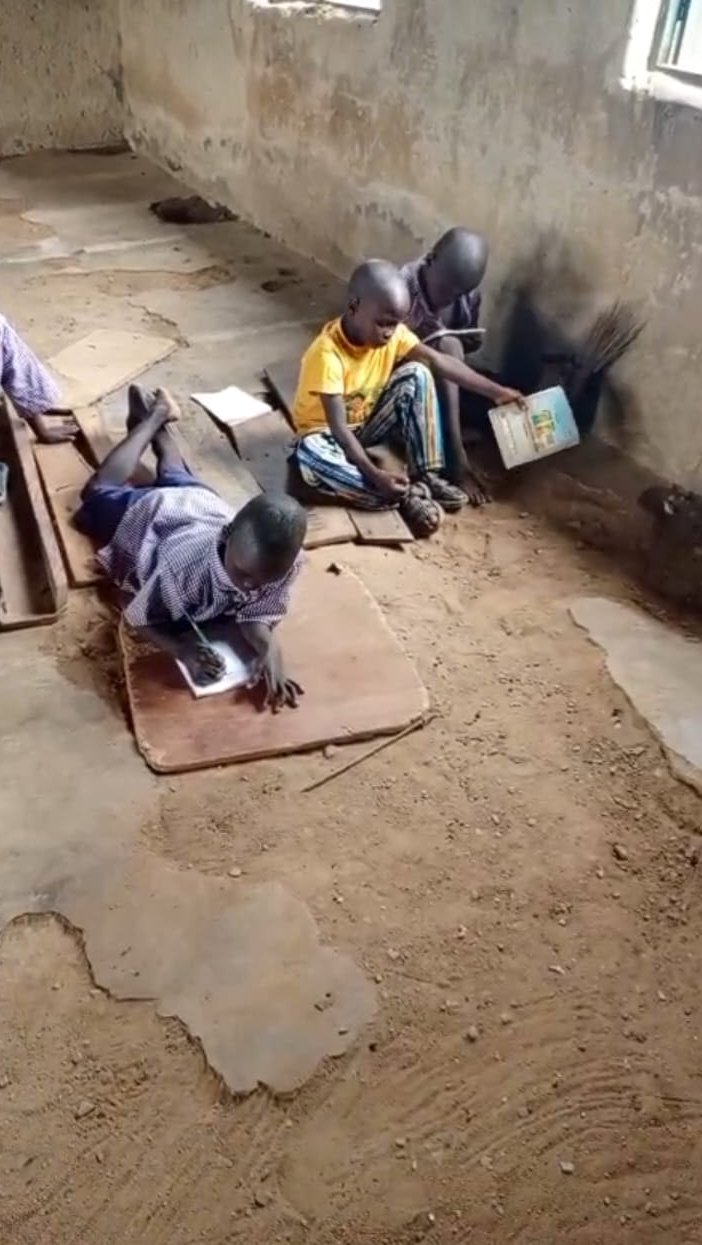
Eight years of unanswered questions, 248 pupils denied a decent learning environment, and a public education crisis demanding immediate accountability.
While government officials make promises about development and the future of the Federal Capital Territory, 248 pupils of Kigbe LEA Primary School in Yebu Ward, Kwali Area Council, are reportedly struggling to obtain something as basic as classroom desks and chairs.
For more than eight years, these children have reportedly endured deplorable learning conditions, sitting on bare floors and makeshift wooden planks in classrooms whose deteriorated floors, exposed earth and poor physical condition paint a disturbing picture of educational neglect.
The situation raises uncomfortable questions for FCT Minister Nyesom Wike, Senator Ireti Kingibe and Hon. Nuhu Daniel Kwali: How can a government speak convincingly about development when children in its jurisdiction have reportedly spent eight years learning without basic classroom facilities?
For these 248 pupils, the promise of education appears to have been reduced to a daily struggle for a place to sit, a safe environment and the opportunity to learn with dignity.
The disturbing images and video emerging from Kigbe LEA Primary School demand more than expressions of sympathy. They demand answers, responsibility and urgent intervention from those entrusted with public leadership.
Wike: Where Is the FCT’s Commitment to Basic Education?
As the minister responsible for the administration of the FCT, Nyesom Wike faces legitimate questions about the state of public infrastructure and the welfare of residents in communities across the territory.
Although responsibility for primary education may involve different levels of government and education authorities, that complexity should not become an excuse for inaction. The relevant authorities must establish who is responsible, identify the funding and administrative gaps, and ensure that the children receive the facilities they need.
Eight years is an extraordinary length of time for pupils to endure such conditions. If the reported circumstances have persisted throughout that period, the FCT administration owes the public an explanation of what has been done, what remains outstanding and when the situation will be corrected.
The children of Kigbe should not become invisible simply because their school is outside the more prominent districts of Abuja.
Kingibe: Where Is the Legislative Pressure for These Children?
Senator Ireti Kingibe also faces a pressing question about representation and advocacy for the people of the FCT.
The plight of children attending a public primary school in such conditions deserves attention beyond routine political engagements. It calls for an inquiry into the school’s needs, engagement with the relevant education authorities and sustained pressure for a practical solution.
Residents deserve to know whether the school’s condition has been brought to the attention of the appropriate authorities and what steps can be taken to secure an intervention.
For the pupils of Kigbe, representation must translate into tangible improvements in their lives. Their immediate needs cannot be addressed by political visibility alone.
Kwali: How Long Must These Children Wait?
For Hon. Nuhu Daniel Kwali, the appeal carries an equally urgent local dimension.
The reported conditions at Kigbe LEA Primary School demand attention from the relevant local education authorities and those responsible for primary school infrastructure and maintenance. The immediate questions are straightforward: Has the school been assessed? Have its needs been documented and escalated? Is there an intervention plan, and when will work begin?
If the problem has persisted for more than eight years, the community deserves a transparent account of why it remains unresolved.
The children cannot repair their classrooms, purchase desks or compel authorities to act. They depend on adults entrusted with public responsibility to protect their interests.
Eight Years of Learning Without Dignity
The consequences of a poor learning environment extend beyond discomfort. Damaged floors, unsuitable seating and inadequate classroom conditions can affect concentration, attendance, teaching effectiveness and the overall learning experience.
During periods of extreme heat, poorly ventilated classrooms may compound the discomfort pupils face. Children who should be concentrating on reading, writing and arithmetic may instead have to endure conditions that make learning unnecessarily difficult.
No child should have to accept indignity as the price of accessing public education.
The issue is not whether Kigbe deserves special treatment. It is whether its children are entitled to the basic facilities that should accompany the provision of public education.
They are.
The Time for Excuses Is Over
Wike, Kingibe and Kwali should treat the situation as an urgent public-interest matter requiring coordinated action rather than another issue to be acknowledged and forgotten.
The relevant authorities should inspect the school, publish an assessment of its infrastructure needs, provide adequate desks and chairs, repair the damaged floor and walls, improve ventilation and establish a clear timeline for completing the necessary work.
They should also explain how the school was allowed to remain in such reported conditions for so long and what measures will prevent a recurrence.
The public should not have to rely indefinitely on distressing images circulating online before the basic needs of schoolchildren receive attention.
The Ultimate Test of Leadership
Leadership is not measured only by major projects, public announcements or impressive development plans. It is also measured by whether ordinary citizens can access essential services and whether the most vulnerable members of society receive the attention they deserve.
At Kigbe LEA Primary School, the reported plight of 248 pupils presents Wike, Kingibe and Kwali with a clear test of public responsibility.
Will the relevant authorities act decisively to improve the school’s conditions, or will these children continue to wait for facilities that should be fundamental to their education?
Eight years is too long for a problem of this nature to remain unresolved.
The pupils of Kigbe did not choose their circumstances. They should not be made to pay for administrative failures, funding gaps or a lack of coordination among public institutions.
Wike, Kingibe and Kwali must help turn this appeal into action. The children need desks, safe classrooms and a decent learning environment—not another round of promises.
For 248 young Nigerians, the future is being shaped in those classrooms today. Their education cannot be postponed, their dignity cannot be negotiated, and their plight must not be ignored.