Kwam 1 Moves to End MC Oluomo–Tafa Sego Rift, Brokers Fresh NURTW Truce

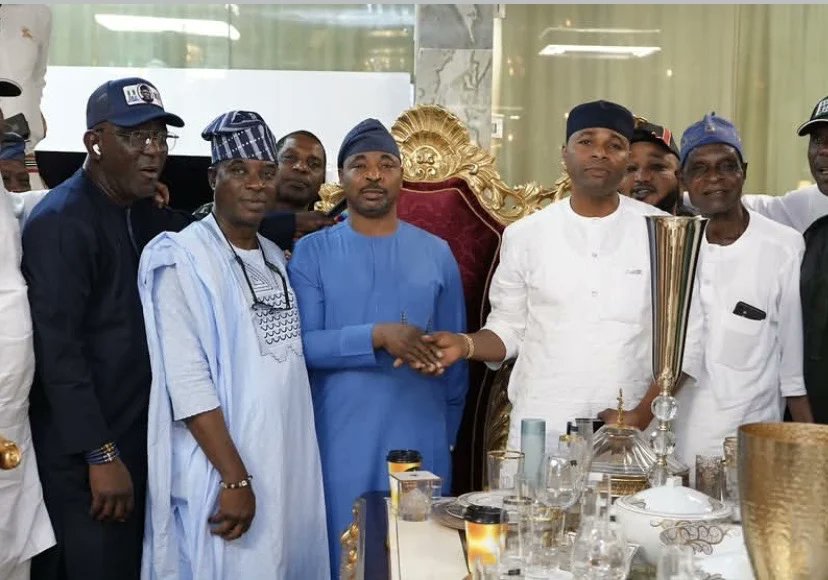
NURTW heavyweight reconciliation takes place in Ijebu as union chieftains rally around peace
Fuji music maestro, Wasiu Ayinde Marshal, popularly known as Kwam 1, has stepped into the brewing differences within the leadership of the National Union of Road Transport Workers (NURTW), brokering a reconciliation between the union’s National President, Musiliu Akinsanya, popularly known as MC Oluomo, and the Lagos State Chairman, Mustapha Adekunle, aka Tafa Sego.
The reconciliation took place at Ojusagbola in Ijebu, Ogun State, where the two influential union leaders met alongside several NURTW chieftains and stakeholders.
The meeting is being viewed as a significant development within the union, particularly against the backdrop of the enormous political and organisational influence wielded by NURTW structures in Lagos and other parts of the country.
For years, MC Oluomo and Tafa Sego have been prominent figures in Lagos’ transport-union landscape, with their respective positions carrying considerable influence among transport workers and union stakeholders.
The intervention by Kwam 1 therefore goes beyond a social gathering, as the reconciliation potentially carries implications for the internal cohesion of one of Nigeria’s most politically consequential transport unions.
Sources familiar with the meeting said the Fuji icon used his longstanding relationships with the two union leaders to encourage dialogue and reconciliation.
At Ojusagbola, the atmosphere reportedly shifted from differences to dialogue as the parties engaged in discussions aimed at restoring understanding and strengthening unity within the union.
The presence of several NURTW chieftains further underscored the importance attached to the meeting.
While details of the issues that necessitated the reconciliation were not immediately made public, the coming together of MC Oluomo and Tafa Sego represents a notable development in the union’s leadership dynamics.
The NURTW has historically remained an important player in Lagos’ transport sector, with its activities frequently intersecting with questions of urban mobility, grassroots organisation and political mobilisation.
Consequently, disputes involving senior union figures often attract attention far beyond the transport sector.
Kwam 1’s intervention also highlights the influence that traditional, cultural and social power brokers can wield in resolving disputes among powerful stakeholders.
The latest development could provide an opportunity for the NURTW leadership in Lagos to focus more squarely on the welfare of transport workers, regulation of the sector and the challenges confronting road transportation across the state.
For now, the meeting at Ojusagbola has produced one clear message: where division once threatened to deepen the fault lines, dialogue has opened the door for reconciliation.
Whether the latest truce will translate into lasting unity within the union, however, will depend on how the parties sustain the understanding reached at the meeting.

