
Nature News
Meet the White-Faced Saki: The Forest Acrobat of South America

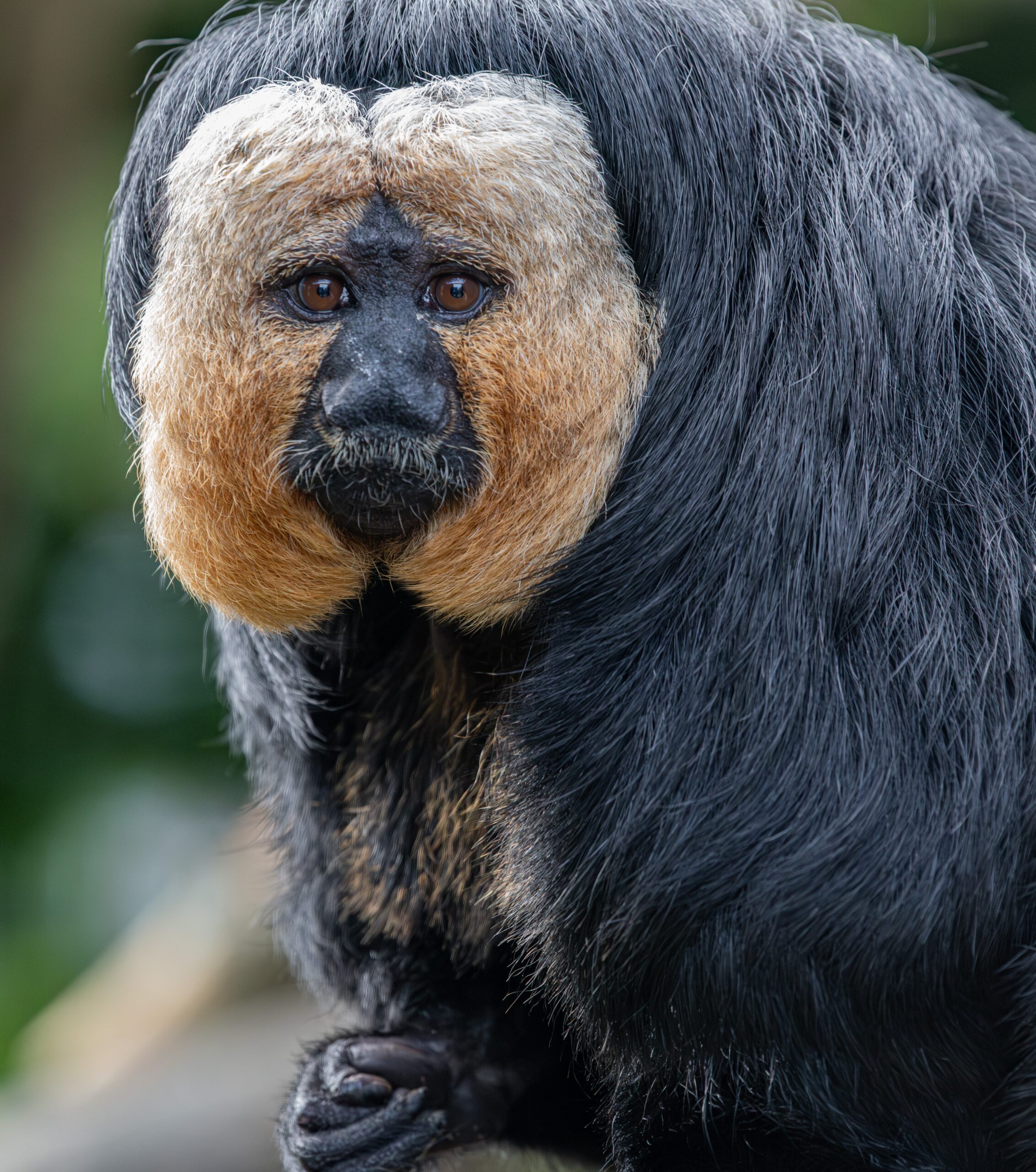
The White-faced saki (Pithecia pithecia) is a fascinating New World monkey found in the tropical forests of northeastern South America, including eastern Venezuela, Guyana, Suriname, French Guiana and northeastern Brazil.
Unlike many monkeys that spend considerable time on the ground, white-faced sakis are highly adapted to life in the trees. They are primarily active during the day and usually remain in the middle and lower levels of the forest canopy.
What does a White-faced Saki look like?
White-faced sakis have long, shaggy fur and remarkably bushy tails that can be almost as long as their bodies. Adults typically measure around 30–48 centimetres, excluding the tail, and weigh approximately 1.5–1.8 kilograms.
There is a striking difference between males and females.
Males are predominantly black, with a distinctive white or reddish face and throat, giving them the appearance that inspired their common name.
Females, on the other hand, have blackish-grey or grey-brown coats. They also have two characteristic white facial stripes that begin around the nostrils and extend outward along the folds beside the mouth.
One of the most remarkable things about white-faced sakis is how they move through the forest.
Their hind legs are considerably longer and more powerful than their front legs, making them excellent jumpers. Instead of swinging through the trees using a prehensile tail, they often leap from branch to branch, using their powerful legs to propel themselves through the canopy.
Their tail is not capable of gripping branches, but it serves an important purpose by helping them maintain balance as they move and jump.
What do they eat?
White-faced sakis have a varied diet. They feed largely on fruits, seeds, nuts and other plant material, but they can also eat leaves, flowers and insects when available.
Their strong jaws and teeth are particularly useful for cracking and processing hard seeds and nuts.
Social and intelligent
These monkeys are generally found in small family groups or social groups, where they communicate using a variety of calls and body signals. Their lives are closely tied to the forest canopy, where they forage, rest and avoid many ground-based predators.
As fruit and seed eaters, white-faced sakis play a role in the health and regeneration of tropical forests. Seeds that pass through their digestive systems can be transported away from the parent tree, helping plants spread throughout the forest.
The White-faced Saki is therefore much more than a strikingly coloured monkey—it is an agile canopy specialist, an accomplished jumper and an important part of the South American rainforest ecosystem.
