News
300 Containers Of Power Equipment Rot For 20 Years: What Exactly Was Adelabu Doing As Minister?

Nearly three years in charge of Nigeria’s Power Ministry, yet hundreds of containers carrying critical electricity infrastructure reportedly remained trapped at the ports. Did Adebayo Adelabu know? Did he investigate? Or was Nigeria’s electricity crisis not enough reason to look beyond official briefings?
Nigeria’s electricity crisis has once again exposed disturbing questions about leadership, supervision and accountability in the Federal Ministry of Power, following President Bola Tinubu’s directive for the immediate clearance of more than 300 containers of electricity equipment reportedly abandoned at Nigerian ports for between 14 and 20 years.
The revelation, made by the Minister of Power, Olasunkanmi Joseph Tegbe, after the Federal Executive Council meeting, is not just another story about bureaucratic bottlenecks. It is a troubling account of public infrastructure purchased with taxpayers’ money, left to deteriorate while millions of Nigerians continue to endure unreliable electricity.
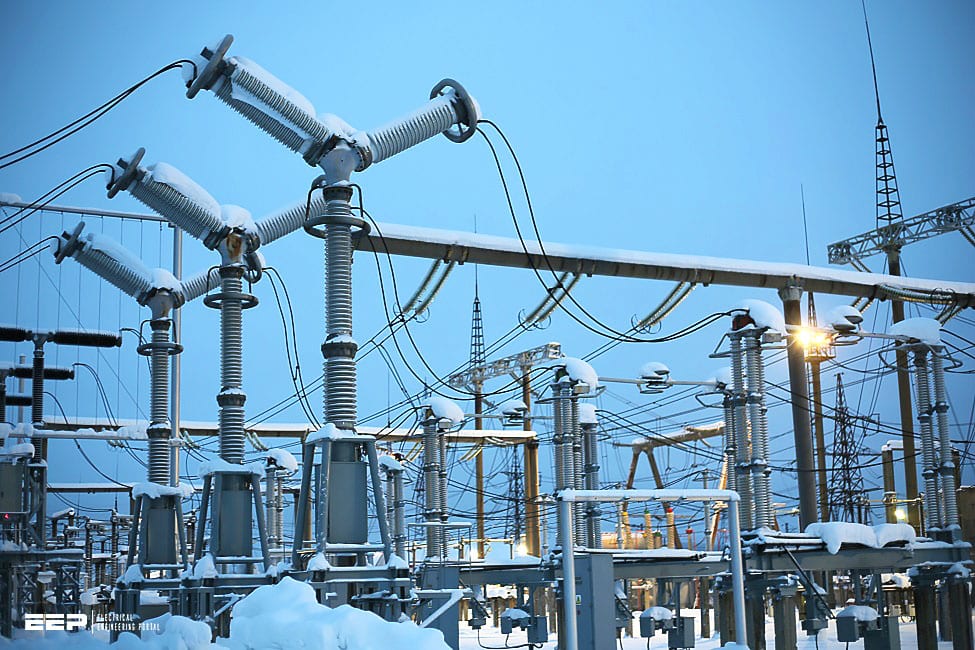
The containers reportedly contain high-capacity transformers, transmission cables, switchgear and other essential equipment imported for government electricity projects, including the National Integrated Power Project (NIPP), Transmission Company of Nigeria (TCN) projects and the Presidential Power Initiative.
According to Tegbe, the equipment became stranded because of outstanding port charges, incomplete customs documentation and a lack of coordination among relevant government agencies.
But while the latest disclosure has brought President Tinubu’s intervention into the spotlight, it has also placed a former Minister of Power, Adebayo Adelabu, under intense public scrutiny.
What exactly was Adelabu doing with the enormous responsibility entrusted to him for nearly three years?
Nearly Three Years In Office: Where Was The Oversight?
Adelabu assumed office as Minister of Power in August 2023 and left in April 2026 to pursue his political ambition in Oyo State.
He therefore spent approximately 32 months overseeing the ministry responsible for managing Nigeria’s electricity sector.
During those 32 months, what happened to the hundreds of containers reportedly carrying essential transmission infrastructure?
Did Adelabu ever request a comprehensive inventory of government-owned electricity equipment stranded at Nigerian ports?
Did he ask the Transmission Company of Nigeria to identify equipment purchased for projects but never delivered to their intended destinations?
Did he summon officials of the Nigerian Ports Authority and Nigeria Customs Service to establish why public assets were being held for years?
Did he ever visit Apapa, Onne or other ports to inspect the situation?
Or was the minister satisfied with presentations, PowerPoint slides, official briefings and announcements about improving electricity generation while critical transmission equipment remained inaccessible?
These are not frivolous questions. They go directly to the heart of ministerial responsibility.
A minister does not have to personally supervise every customs transaction. However, he has a responsibility to ensure that his ministry knows the condition of its assets, identifies obstacles to project delivery and takes appropriate action to resolve them.
If Adelabu knew about the containers, Nigerians deserve to know what he did.
If he did not know, the country deserves an explanation of how such a significant infrastructure backlog escaped the attention of the ministry under his supervision.
He Visited Apapa To Inspect Smart Meters. What About The 300 Containers?
One particularly important issue deserves clarification.
Reports indicate that Adelabu visited Apapa in January 2026 to inspect 23 containers containing approximately 1.4 million smart meters.
That visit raises an unavoidable question: if the former minister could visit Apapa to inspect smart meters, why did the reported backlog of more than 300 containers of electricity equipment not receive similar attention?
Was the existence of the stranded equipment brought to his attention?
Were the containers located within the same port facilities or under the same operational jurisdiction? What did the ministry’s officials report to him?
The comparison is particularly relevant because both smart meters and transmission equipment are important components of the electricity value chain.
It would be premature to conclude that Adelabu deliberately ignored the containers without establishing what information reached him. But it would be equally unacceptable to dismiss the questions his tenure raises.
How does a minister supervise a sector for almost three years without Nigerians receiving a clear account of such a significant backlog of public infrastructure?
Electricity Equipment Abandoned While Nigerians Paid The Price
The irony is difficult to ignore.
Nigeria has repeatedly struggled with transmission limitations, grid instability, inadequate infrastructure and unreliable electricity supply.
Businesses have invested billions of naira in alternative power. Manufacturers have complained about energy costs. Small businesses have struggled to remain operational, while households have continued to depend on generators and other expensive alternatives.
Yet the Federal Government now says hundreds of containers carrying equipment intended to strengthen the national grid have remained stranded at the ports for years.
The equipment was reportedly procured for transmission expansion and grid stabilisation projects.
The government has also discussed the East and West Super Grid initiatives, which are intended to expand transmission capacity towards 19,000MW.
One cannot help asking whether some of the stranded equipment could have helped address existing infrastructure gaps if it had been cleared and deployed earlier.
How much money was spent procuring the equipment?
How much has accumulated in demurrage and other port charges?
How many transformers and other materials have become obsolete?
How many projects were delayed because the equipment intended for them was unavailable?
These questions require an independent and transparent investigation.
Adelabu Cannot Escape Questions About His Tenure
The former minister may have left office, but leaving the ministry does not erase the responsibility to account for decisions, omissions and administrative failures that occurred during his tenure.
Adelabu must be given the opportunity to explain what his ministry knew about the stranded containers, whether the issue was investigated and what steps were taken to resolve it.
The Federal Government should also publish the original procurement records, dates of arrival, port locations, outstanding charges, project allocations and correspondence between the Ministry of Power, TCN, NPA and Customs.
This is bigger than political rivalry or the ambitions of any individual seeking elective office.
It is about public money, national infrastructure and the right of Nigerians to demand accountability from those entrusted with public office.
Tinubu’s Directive Must Not Become Another Publicity Exercise
President Tinubu has now ordered the immediate clearance of the containers, with technical experts expected to inspect the contents and determine which equipment remains usable.
That is a necessary first step, but it must be followed by a full audit and public disclosure.
Those responsible for the prolonged abandonment of the equipment must be identified. Where negligence or misconduct is established, appropriate consequences should follow, irrespective of the administration under which it occurred.
Nigeria cannot continue spending public money on infrastructure while allowing purchased assets to waste away in ports and warehouses.
And to Adebayo Adelabu, the questions remain: For nearly three years, you were the Minister of Power. Did you know that these containers existed? Did you ever demand their release? Did you investigate why they were abandoned? What did you do to prevent further losses to the country?
If you knew, Nigerians deserve to hear what action you took. If you did not know, Nigerians deserve to understand why.
You cannot preside over a ministry for almost three years, leave office, and expect the public not to ask questions when the next minister discovers hundreds of containers of critical electricity equipment reportedly wasting away at the ports.
Nigeria needs explanations. Nigerians deserve accountability. And the electricity sector cannot afford another era in which public assets are forgotten while citizens are left in darkness.
THE PRESS NIGERIA | ACCOUNTABILITY JOURNALISM