Education
Nigeria Unveils First National EdTech Strategy, AI Chatbot to Tackle Nearly 1m Teacher Shortage

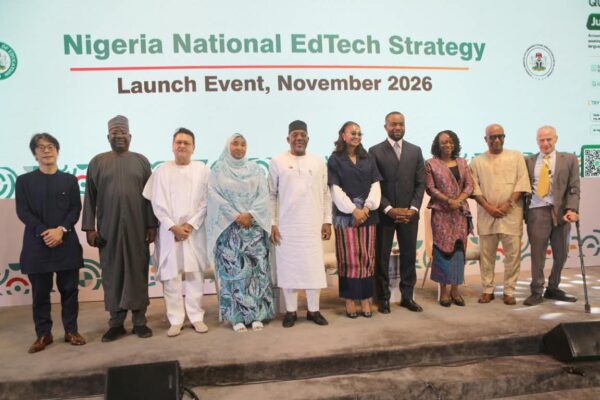
The Federal Government has unveiled Nigeria’s first National Education Technology (EdTech) Strategy, alongside an artificial intelligence-powered chatbot and a digital education data platform, as part of efforts to address the country’s nearly one-million-teacher shortage and improve access to quality education.
The Minister of Education, Dr Maruf Tunji Alausa, announced the initiatives on Wednesday, November 18, 2026, describing technology as a critical instrument for transforming the country’s education system and expanding learning opportunities.
The initiatives comprise the National Education Technology Strategy, the AI-powered AskFME chatbot and the Nigeria Education Data Infrastructure (NEDI).
Alausa explained that the new digital platforms would support teachers, improve education delivery and make learning resources more accessible to Nigerians.
He said NEDI would provide reliable education data to strengthen evidence-based policymaking and planning, while AskFME would improve public access to information and services offered by the Federal Ministry of Education.
The minister also identified digital learning platforms, including Inspired Life, as part of the government’s broader strategy to expand educational opportunities.
He stressed the importance of sustainable implementation, stronger public-private partnerships and improved digital skills among teachers to ensure the initiatives produce measurable results.
Also speaking at the unveiling, the Minister of Communications, Innovation and Digital Economy, Dr Bosun Tijani, disclosed plans to deploy 3,700 telecommunications towers and establish 90,000 kilometres of fibre-optic infrastructure by 2027.
He said improved connectivity would be essential to expanding technology-driven education, particularly in rural and underserved communities.
The Minister of State for Education, Professor Suwaiba Sa’id Ahmad, called for inclusive access to digital education, relevant learning content, teacher development and adequate infrastructure.
She emphasised that children with disabilities and learners in underserved communities must not be excluded from the country’s digital education transformation.
Similarly, the Director Overseeing the Office of the Permanent Secretary, Dr Folake Olatunji-David, described the initiatives as an important milestone under the Federal Government’s Renewed Hope Agenda, stressing the need for measurable outcomes.
Representatives of the World Bank and Mastercard Foundation also reaffirmed their support for Nigeria’s education transformation, highlighting foundational learning, digital skills and equitable access to educational opportunities.
Providing further details, the NEDI Coordinator, Dr Abubakar Isah, disclosed that preparatory work on the infrastructure was 80 per cent complete.
He said implementation would take place in three phases between 2026 and 2030, focusing on five key pillars: data, infrastructure, technology, teacher transformation and governance.
The unveiling represents a major policy push towards modernising Nigeria’s education sector through technology. However, the success of the initiatives will depend on effective implementation, reliable electricity, affordable internet access, adequate teacher training and the ability to extend digital learning facilities to communities currently underserved by educational infrastructure.