
Education
Olowolafe Foundation Pledges Solar Power, Digital Learning Facilities for OAU Postgraduate College

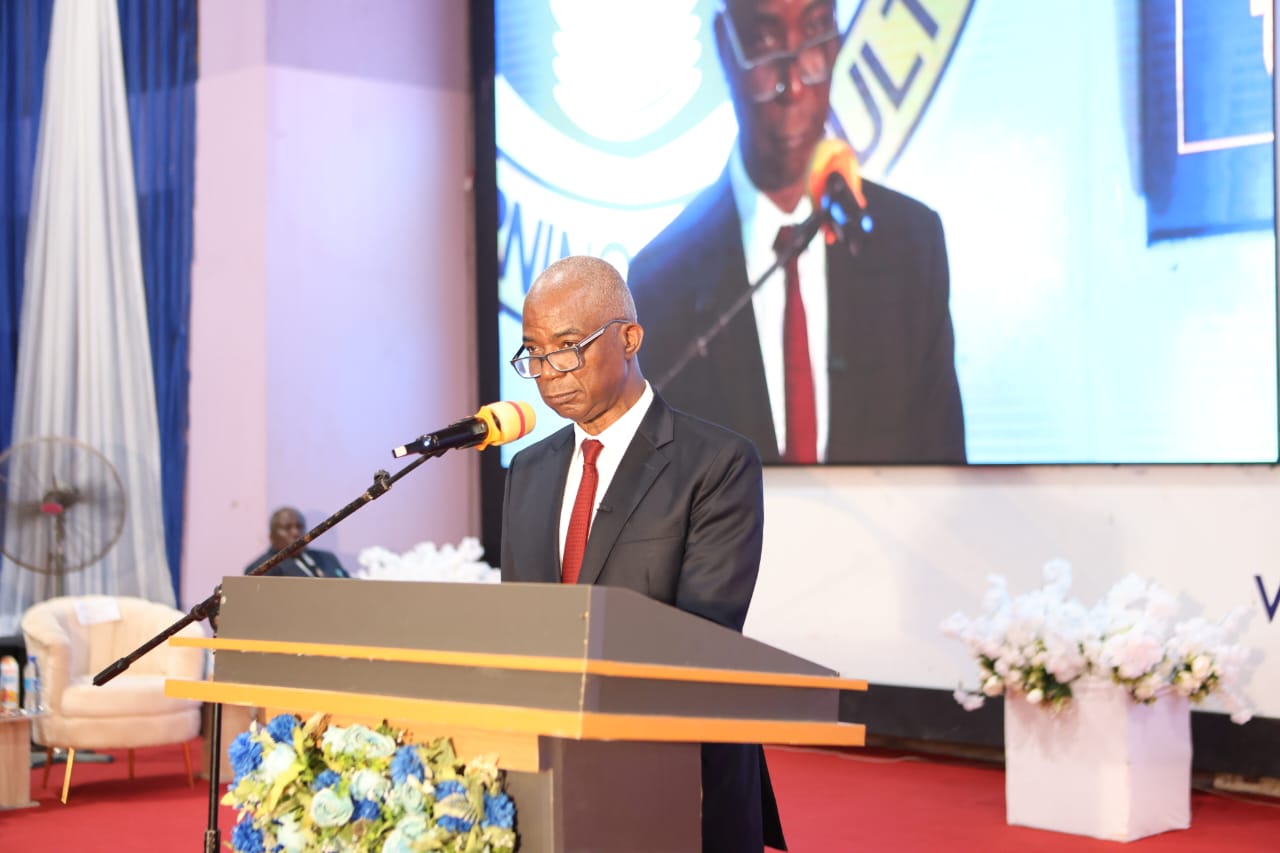
Dr. Tunji Olowolafe, Chancellor of Ekiti State University and founder of the Tunji Olowolafe Foundation, has announced a series of interventions to strengthen research, digital learning and postgraduate education at Obafemi Awolowo University (OAU), Ile-Ife.
The interventions include the installation of a dedicated solar power system, provision of a fully equipped virtual learning and oral defence facility, modernisation of the Postgraduate College Boardroom, and financial support for preliminary research aimed at securing major international grants.
Olowolafe announced the commitments while delivering an address at the grand finale of the university’s Postgraduate College Week, organised as part of activities marking OAU’s 65th anniversary.
Speaking on the theme, “Promoting Research Excellence and Innovation in Postgraduate Studies: Charting the Future,” he called on Nigerian universities to embrace technology, expand access to research and ensure that academic discoveries translate into practical solutions to societal challenges.
Under the foundation’s planned interventions, the solar power system will serve the Postgraduate College’s administrative offices, ICT centres and examination facilities. The foundation will also support specialised training in grant writing, donor compliance and institutional advancement to improve the College’s ability to attract international research funding.
Olowolafe stressed that research must move beyond academic publications to become a driving force for public policy, economic development and improved living standards.
He identified three priorities for transforming postgraduate education: expanding access to research opportunities, subjecting established beliefs to scientific scrutiny, and ensuring that research findings deliver measurable benefits to society.
Using the example of a rice farmer in Goronyo, Sokoto State, with decades of practical experience, he questioned why such expertise could not be incorporated into university research through appropriate academic partnerships and supervision.
He argued that universities should create pathways for individuals with demonstrable expertise and recognised prior learning to contribute to academic investigations without compromising established standards.
The OAU alumnus also advocated the early integration of science, technology, innovation and artificial intelligence into education, noting that the next generation of researchers must be identified and nurtured from childhood.
On digital transformation, Olowolafe urged the university to expand virtual learning, digitise postgraduate records and publicise flexible study options to reach more students in Nigeria and abroad.
Citing figures presented during his address, he noted that approximately two million candidates sat the Unified Tertiary Matriculation Examination in 2025, while about one million secured admission, leaving a substantial number without university places.
He said digital learning could help Nigerian universities overcome the limitations of physical infrastructure and extend educational opportunities to more young people.
Olowolafe further called for stronger partnerships between universities and industry, urging institutions to recognise patents, commercialised products and solutions to industrial problems alongside scholarly publications when assessing academic performance and promotion.
He maintained that research should not remain confined to laboratories and academic journals but should produce innovations capable of addressing real-world challenges.
He also urged researchers to subject indigenous knowledge in herbal medicine, agriculture, building techniques and food preservation to rigorous scientific investigation.
Citing Chinese scientist Tu Youyou’s research into traditional medical texts, which contributed to the discovery of artemisinin, an important malaria treatment, he argued that traditional knowledge could provide valuable leads for scientific breakthroughs.
On alumni participation, Olowolafe challenged OAU graduates to increase their financial contributions, mentorship and institutional support for research by at least tenfold.
He highlighted the university’s research achievements, including a reported $5 million Gates Foundation grant secured by Professor Ibraheem Awowole to support efforts to reduce maternal mortality in Nigeria. He also cited more than 70 patents reportedly secured by campus researchers through the university’s Intellectual Property and Technology Transfer Office.
The foundation’s founder commended the university’s leadership under Vice-Chancellor Professor Adebayo Simeon Bamire, particularly its reported efforts to develop an institutional policy on artificial intelligence and strengthen research capacity.
Reflecting on his educational journey, Olowolafe recounted his unsuccessful attempt to gain admission to OAU in 1977 before proceeding to the University of Ilorin, where he studied medicine.
He said his experience reinforced his conviction that education remains one of the most powerful instruments of social mobility and community development.
He also highlighted the Gbemisola Olowolafe Memorial Community Secondary School in Are-Ekiti, which opened in September 2025 with 100 students and had grown to more than 170. The initiative also includes an ICT centre providing training in artificial intelligence, coding, graphic design and Mandarin.
According to him, the project demonstrates how quality education and digital skills can be extended to communities beyond major urban centres.
As OAU celebrates 65 years of academic service, Olowolafe urged the institution and other Nigerian universities to invest more heavily in research infrastructure, technological innovation and partnerships that connect academic discoveries with national development.
He congratulated the university’s Governing Council, management, staff and students on the anniversary, expressing confidence that the foundation’s commitments would help make the Postgraduate College more digitally enabled, flexible and globally connected.
The interventions, he said, are intended to strengthen research capacity, improve access to postgraduate education and position the College to make a greater contribution to Nigeria’s development.
