Opinion
QUOTA SYSTEM IS DESTROYING NIGERIA’S AGE-GRADE FOOTBALL

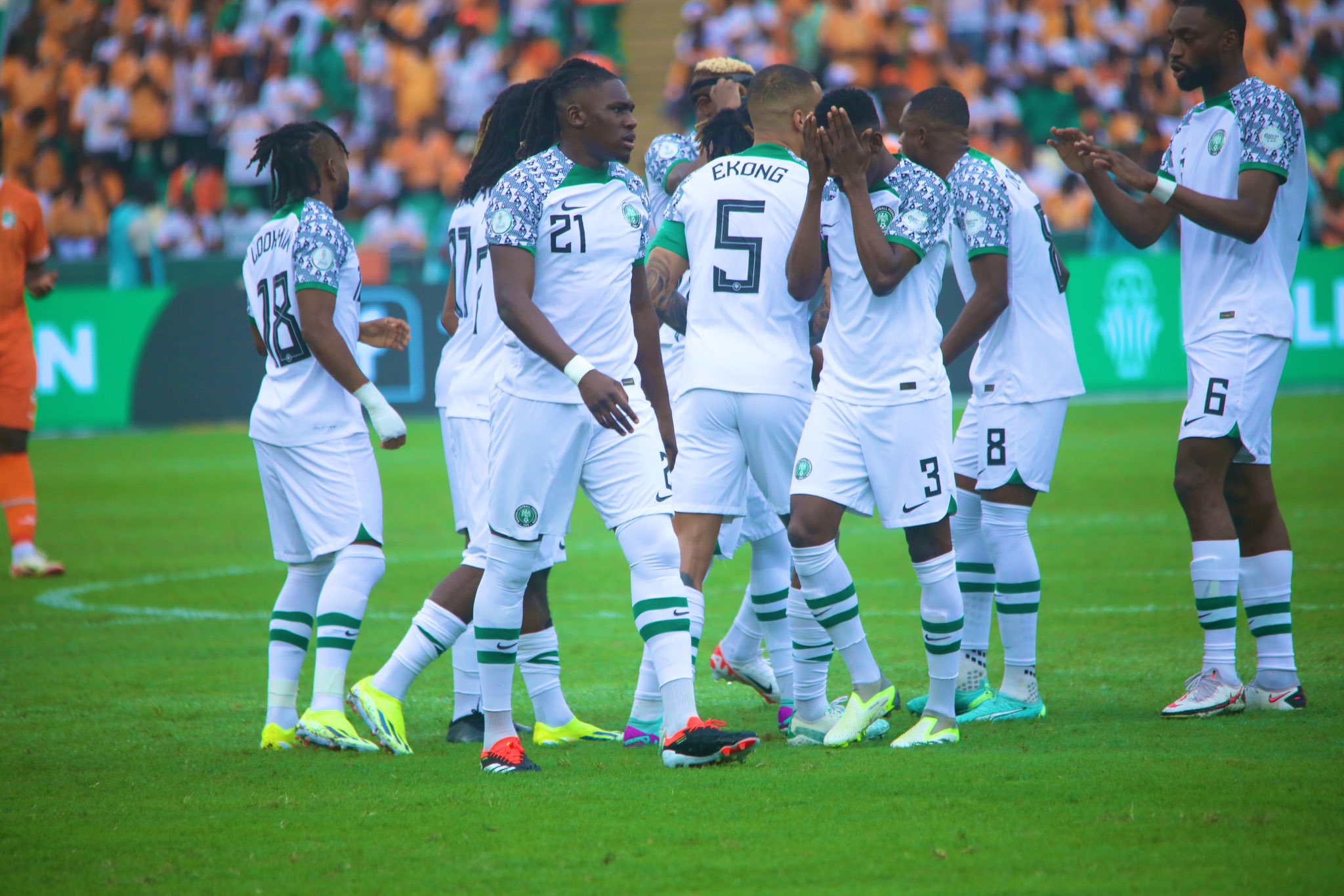
From Five-Time World Champions to Early Eliminations: Nigerian Youth Football Is Paying the Price for a Broken System
Nigerian football is in trouble, and nowhere is the damage more alarming than in our age-grade football. The foundation of our future is crumbling, yet those responsible for protecting it appear unwilling to confront the problems destroying it.
The Golden Eaglets’ failure to qualify for the 2027 U-17 Africa Cup of Nations has ended their hopes of reaching the FIFA U-17 World Cup. The Flying Eagles have also failed to secure qualification for the U-20 Africa Cup of Nations and the FIFA U-20 World Cup.
These are not ordinary setbacks. They are warning signs of a deeper crisis in a country that once dominated youth football and made the world sit up whenever Nigeria’s youngsters stepped onto the pitch.
Nigeria has won the FIFA U-17 World Cup five times, more than any other nation. The Flying Eagles have won the African U-20 title seven times and reached the FIFA U-20 World Cup final twice. These achievements were not accidents. They were products of talent, competitive selection and a system that once gave Nigeria an edge over the rest of the world.
From our age-grade teams emerged players such as Nwankwo Kanu, Celestine Babayaro, John Obi Mikel, Kelechi Iheanacho, Victor Osimhen, Samuel Chukwueze and Taiwo Awoniyi. They were once young prospects who benefited from opportunities to compete, develop and prove themselves before becoming household names.
Today, that production line is struggling. Nigeria is missing major youth tournaments, and the consequences will eventually reach the senior national team. When the pipeline fails, the Super Eagles lose the next generation of players capable of sustaining the country’s footballing reputation.
The question is no longer whether Nigerian age-grade football is declining. The question is why those entrusted with its development have allowed it to deteriorate to this level.
One major problem is the collapse of grassroots football. School competitions, inter-house sports, community tournaments and local scouting once provided a steady supply of young talents. Children played regularly, competed against one another and developed their abilities long before national selectors came calling.
Those opportunities have diminished in many places. Inadequate facilities, poorly maintained pitches, weak school sports programmes and insufficient investment have left many talented youngsters without the platform to develop. The result is a shrinking pool of properly nurtured players and a system increasingly struggling to identify and prepare the best available talents.
But beyond grassroots neglect lies another issue that deserves urgent attention: the alleged influence of quota considerations, regional balancing and federal-character calculations in age-grade team selection.
Age-grade football must not become a political settlement where places are shared to satisfy regions rather than earned through footballing ability.
A national youth team is not a political appointment list. It is not a committee where every geopolitical zone must receive a predetermined number of slots. It is a competitive squad whose players must be capable of representing Nigeria against the best in the world.
If a player from the North is the best available talent for a position, he should be selected. If the best player comes from the South-West, South-East, South-South or North-Central, he should equally earn his place. No region should be favoured, and no region should be disadvantaged.
The issue is not whether every part of Nigeria deserves representation in the country’s football development. Of course, every region should have access to proper facilities, quality coaching, scouting opportunities and a fair chance to produce national-team players.
The real issue is what happens when the pursuit of regional balance begins to interfere with competitive selection.
If a technically superior player is dropped to accommodate another candidate simply because a particular region must be represented, Nigeria has sacrificed quality for convenience. If a coach or technical official is appointed for reasons unrelated to competence, the team suffers. And when such compromises occur at the age-grade level, the damage can follow players throughout their careers.
These concerns must be investigated rather than dismissed. Poor tournament results alone do not prove that quotas caused Nigeria’s recent failures, but the Nigeria Football Federation must be transparent about its selection criteria and demonstrate that footballing merit remains the overriding consideration.
You cannot build a world-beating team by weakening the competition for places.
Age-grade football is too important to be treated as an avenue for political patronage, regional appeasement or administrative experimentation. At this level, the country is supposed to identify exceptional talent, expose young players to high-level competition and prepare them for the demands of international football.
Instead, Nigeria risks losing the very advantage that once made its youth teams feared across the globe.
The consequences go beyond missed tournaments. Every failed qualification denies young footballers invaluable international experience. It deprives them of opportunities to face elite opposition, attracts less attention from international scouts and disrupts their development. It also reduces the pool of experienced young players available to strengthen the Super Eagles in the years ahead.
The NFF must therefore stop treating age-grade football as a secondary concern. These teams are not merely junior versions of the senior national side; they are the foundation upon which the future of Nigerian football rests.
There must be a comprehensive review of scouting, player selection, coaching appointments, youth development and grassroots competitions. Selection criteria should be clear, technical decisions should be defensible, and every qualified player should have an equal opportunity to compete for a place.
Nigeria must rebuild school football, strengthen state-level competitions, invest in qualified youth coaches and establish credible scouting networks across all 36 states and the Federal Capital Territory. Talents from overlooked communities must be discovered, not because they satisfy a quota, but because their abilities deserve recognition.
Most importantly, the NFF must ensure that every player selected for an age-grade national team can justify that selection on footballing grounds.
The world will not give Nigeria extra points because its squad reflects regional diversity. Opponents will not lower their standards because we want every zone represented. At international tournaments, the only language that matters is performance.
Nigeria once demonstrated that it could produce youth teams capable of conquering the world. We should not accept mediocrity as our new normal.
The decline of the Golden Eaglets and Flying Eagles should trigger serious reflection, honest investigations and urgent reforms. Those responsible must explain what has gone wrong and present a credible plan to restore the country’s competitive edge.
Our young footballers deserve better. Nigerian football supporters deserve better. And a country with Nigeria’s footballing history should demand better.
The message is simple: develop talent everywhere, scout without prejudice, select without political interference and reward merit above all else.
If the quota system is influencing age-grade selections at the expense of quality, it must go. If grassroots football has collapsed, rebuild it. If coaching and scouting have failed, fix them.
Nigeria cannot continue celebrating the glory of five U-17 World Cup titles while watching the next generation struggle to qualify for the competition.
The future of Nigerian football is being decided at the age-grade level. If we destroy the foundation, we should not be surprised when the entire house comes crashing down.