News
INEC’S GHOST VOTERS: BUHARI, AKEREDOLU, IFEANYI UBAH, DOKPESI STILL ‘ALIVE’ ON VOTER PORTAL

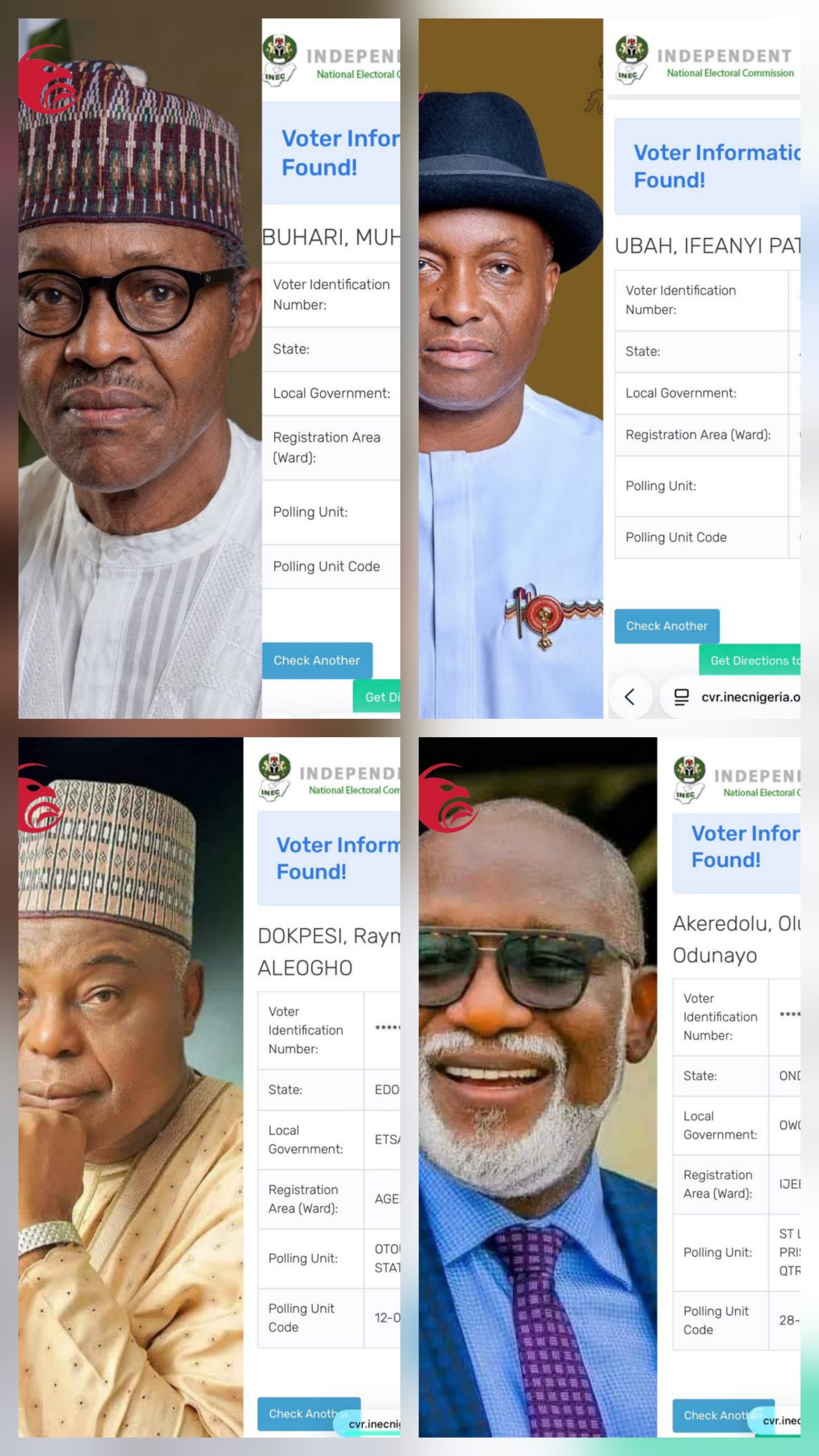
Electoral Commission Faces Tough Questions Over Deceased Nigerians’ Records as 2027 Elections Approach
The Independent National Electoral Commission (INEC) is facing fresh questions over the credibility of Nigeria’s voters’ register after the records of four prominent Nigerians who are dead reportedly returned the message, “Voter Information Found!” on its online voter verification portal.
The deceased Nigerians are former President Muhammadu Buhari, former Ondo State Governor Rotimi Akeredolu, Senator Ifeanyi Ubah and veteran media entrepreneur Raymond Dokpesi.
Their reported appearance on the portal has raised troubling questions about INEC’s data management, voter verification procedures and the effectiveness of its mechanisms for identifying and removing deceased persons from the electoral register.
If the records of these prominent Nigerians remain accessible on the platform, Nigerians are entitled to ask a bigger question: how many other deceased citizens remain on the register, and what is INEC doing to establish the true scale of the problem?
The controversy strikes at the heart of electoral credibility. A voters’ register is not merely a database of names; it is a fundamental instrument for determining who is eligible to participate in an election. Its accuracy is therefore central to public confidence in the democratic process.
INEC must explain why the records of people whose deaths are publicly known reportedly remain retrievable through its verification portal. Is the commission relying on an inefficient system for receiving death notifications? Are its records routinely cross-checked against credible civil registration data? And how quickly are confirmed deaths reflected in the electoral database?
These are not questions the commission should dismiss as technical details. They concern the integrity of the register that will underpin the 2027 general elections.
The issue also demands a distinction between a record remaining in a database and an actual attempt to vote using that record. The portal’s response does not, by itself, establish that any deceased person has voted, that anyone has impersonated them or that election results have been manipulated. But that distinction does not remove INEC’s responsibility to explain the apparent discrepancies and demonstrate that its safeguards are effective.
INEC has previously faced questions over deceased voters remaining on the register. Reports in June 2026 indicated that the commission had removed 7,746 deceased persons through its claims-and-objections process. That figure makes transparency even more important: how many deceased voters remain, how was the figure established, and what independent verification supports it?
With the 2027 elections approaching, Nigerians should not be left to speculate about the number of potentially inaccurate records on the register. INEC should publish the results of its ongoing review, explain its procedures for removing deceased voters and provide a clear account of the measures being taken to ensure that the final register is accurate.
The commission must also demonstrate that its verification platform does more than confirm that a record exists. Nigerians deserve confidence that the underlying information is current, reliable and subject to effective checks.
How many more deceased Nigerians are still on INEC’s register? Who is responsible for ensuring that their records are properly reviewed? And what independent safeguards will prevent inaccuracies from undermining confidence in the 2027 elections?
These are questions that demand clear, evidence-based answers—not silence, excuses or assurances without supporting data.
INEC has a responsibility to protect the integrity of Nigeria’s electoral process. Before asking citizens to trust the register at the polls, it must demonstrate that the register itself deserves their trust.
The 2027 election must not become a test of whether INEC can manage a database. It must be an exercise in credible democracy—and that begins with getting the voters’ register right.